
For some families, it wouldn't be Christmas without mincemeat pies, and the recipe for making them is a closely guarded secret passed down to only one person per generation.
Today, though, the name comes across as somewhat deceptive. Why are they called mincemeat when there is no meat in them?
What is it?
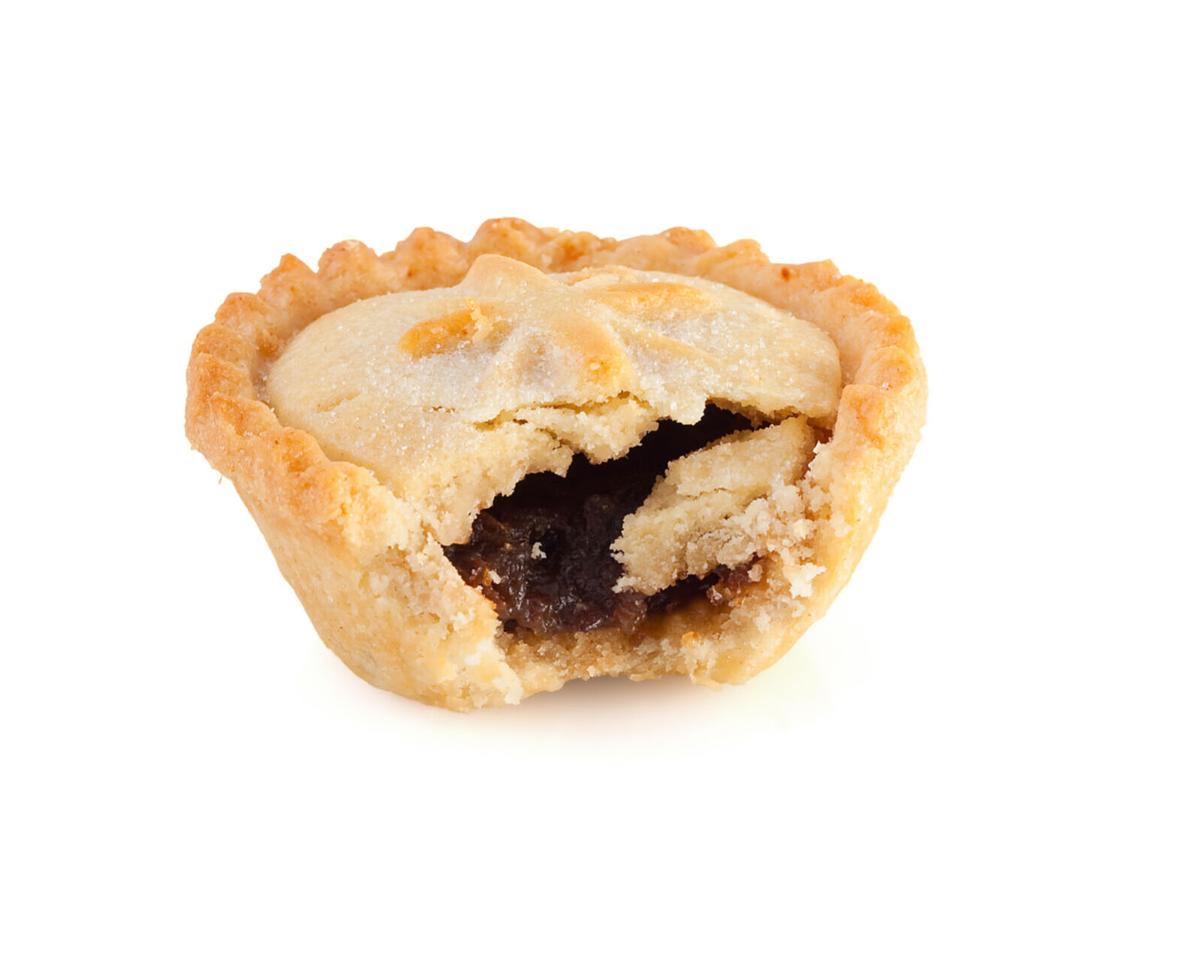
Mincemeat pies today are a pastry made with a flaky crust and filled with mincemeat — chopped dried fruits, spices, sugar and nuts soaked in brandy and infused with citrus or mild spice. Today they are usually round, though the top crust is sometimes cut into decorative shapes.
Other names for mince pies over the centuries have been Christmas pyes, shred pies, crib cakes (referring to the Christ child in his crib) and wayfarer's pies.
History
People are also reading…
Mincemeat pies date back to the Middle Ages. Back then, mincemeat did contain meat, usually mutton but sometimes beef, rabbit, pork or game. Mincemeat was a way to preserve meat. The meat was finely chopped, as was the fruit, and it was mixed with a preserving liquid.
According to Walkers, who now sells packaged mincemeat pies, King Henry V served mincemeat pie at his coronation in 1413. It was his favorite Christmas dish, then served as the main course.
During the Tudor period (of which Henry V was the first monarch), according to the website Historic UK, mincemeat pies were rectangular, purposely shaped like a manger, and a pastry representation of Jesus was put on the top. The pies were made with 13 ingredients, one ingredient to represent Jesus and each of his apostles. Different ingredients symbolized different parts of the Christmas story, such as lamb and mutton or the shepherds and spices for the Magi.
After the Reformation, mince pies started to be round.
The ingredients changed through the years. Originally made with lamb or veal, in the 18th century bakers started to use tongue or tripe. By the 19th century, minced beef was popular. Again according to Historic UK, it was only in the late Victorian era and the early 20th century that meat was no longer used in mincemeat.
Folklore/traditions
The making of mincemeat pies carries with it many traditions. The most common one is that it should always be stirred in a clockwise direction. If you stir counterclockwise, you'll have bad luck all year. Stirring the mincemeat was often a family affair, with each family member getting to give the mincemeat a stir while making a wish.
It's also considered bad luck to cut it with a knife.
Mincemeat pies were often made on what is called "stir-up Sunday," the last Sunday before Advent begins. That is when British families would make the Christmas pudding and the mincemeat tarts.
If you wanted to have good health and happiness in the new year, then folklore has it you should eat one mincemeat pie on each of the 12 Days of Christmas.